Two Steer Tires
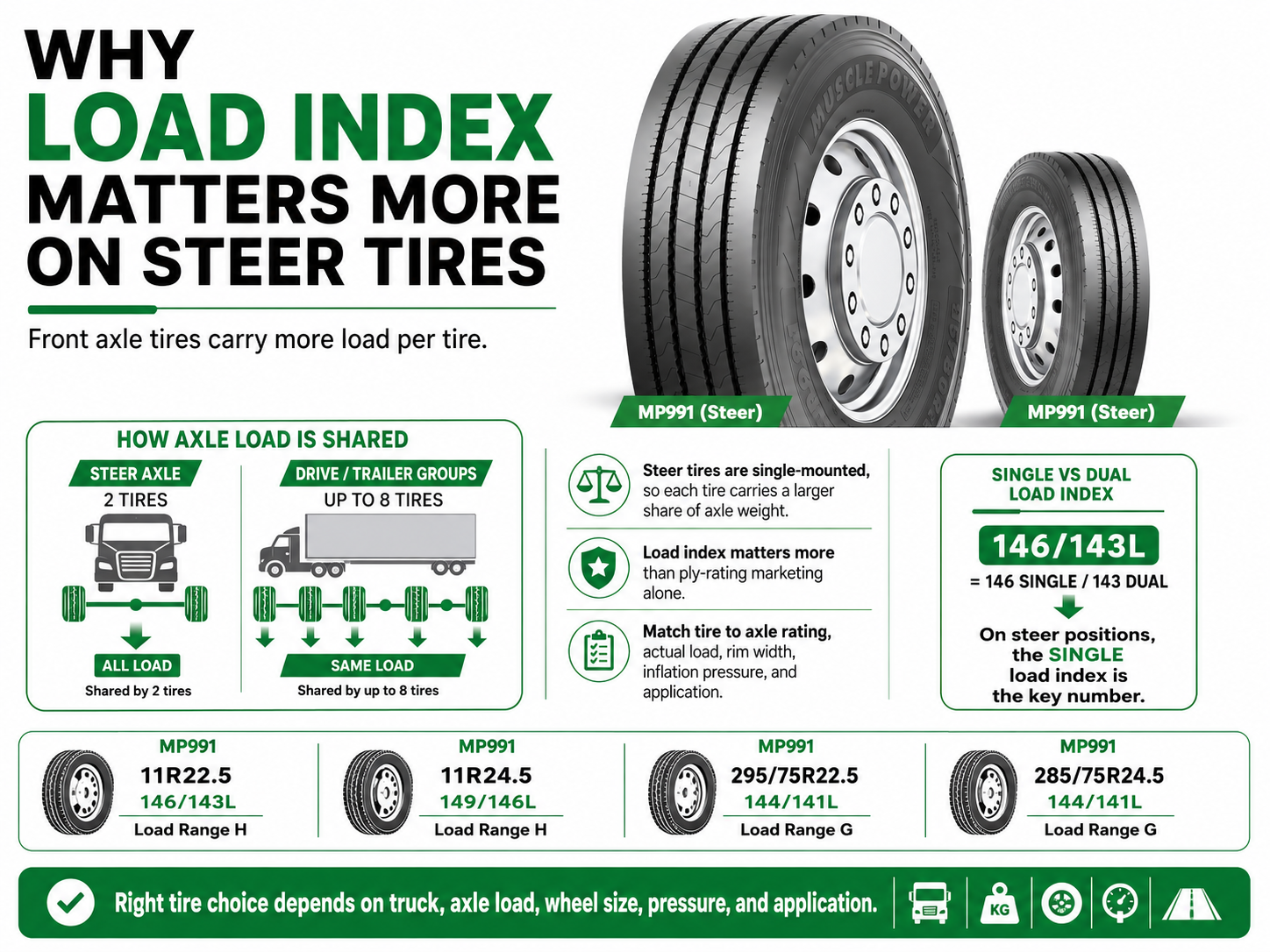
The front axle load is normally carried by one tire on each side.
Single Load Index
The first load index number is most relevant for front axle positions.
Match the Axle
Match the tire to axle rating, actual load, rim width, and inflation pressure.
Load index is especially important because the front axle normally uses only two tires. On a tandem drive or trailer axle group, the load may be distributed across eight tires. Up front, each tire carries a much larger share of the axle weight.
That means tire selection should not be based on ply rating alone. The correct tire must match the truck's front axle rating, actual load, rim width, inflation pressure, and application. A higher load index can matter more on front positions than on many dual-tire drive or trailer positions because there are fewer tires carrying the axle load.
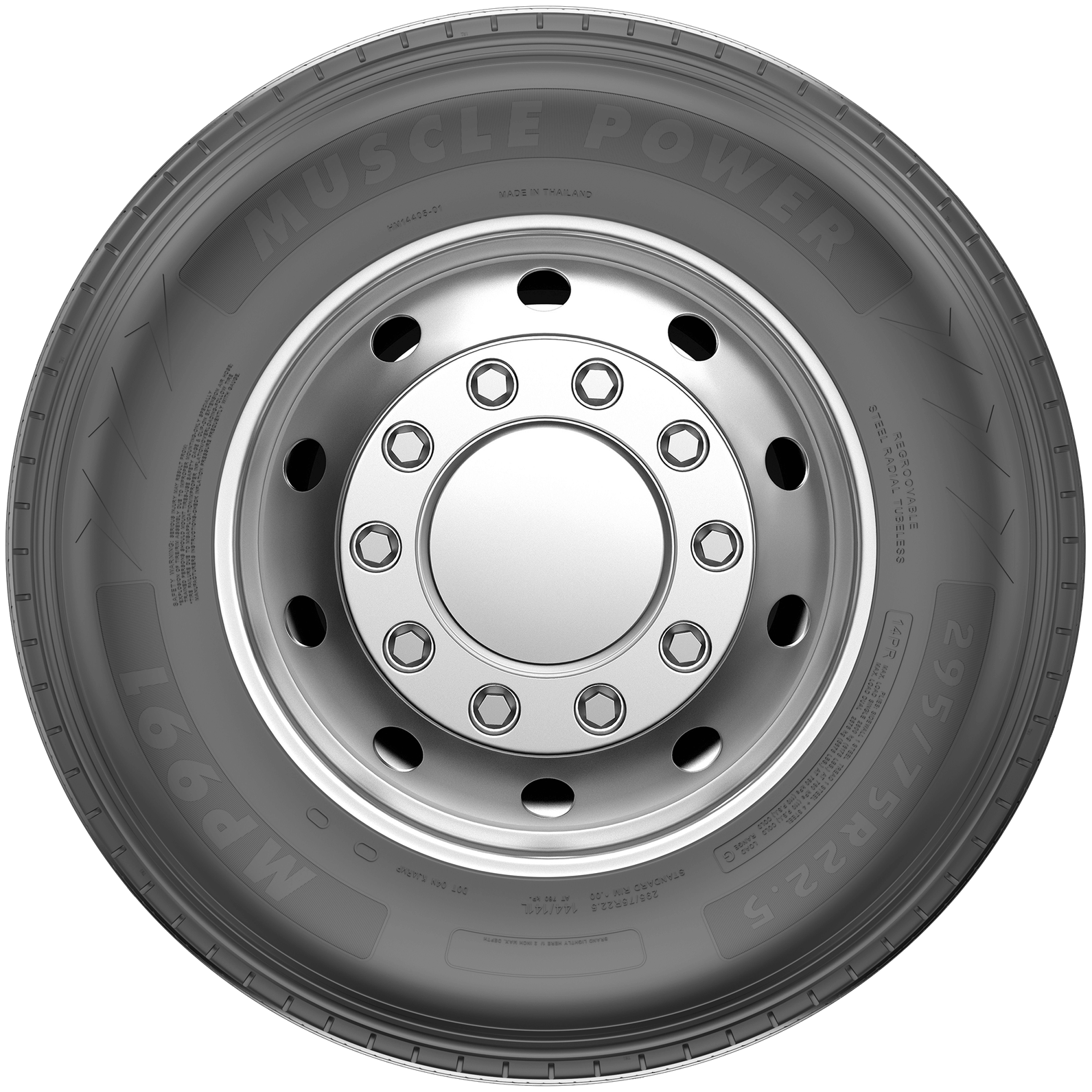
For example, a tire marked 146/143 uses the first load index number for single-tire use and the second for dual-tire use. On front axle positions, the single-tire load index is the more relevant number because each tire is mounted as a single tire, not a dual pair.
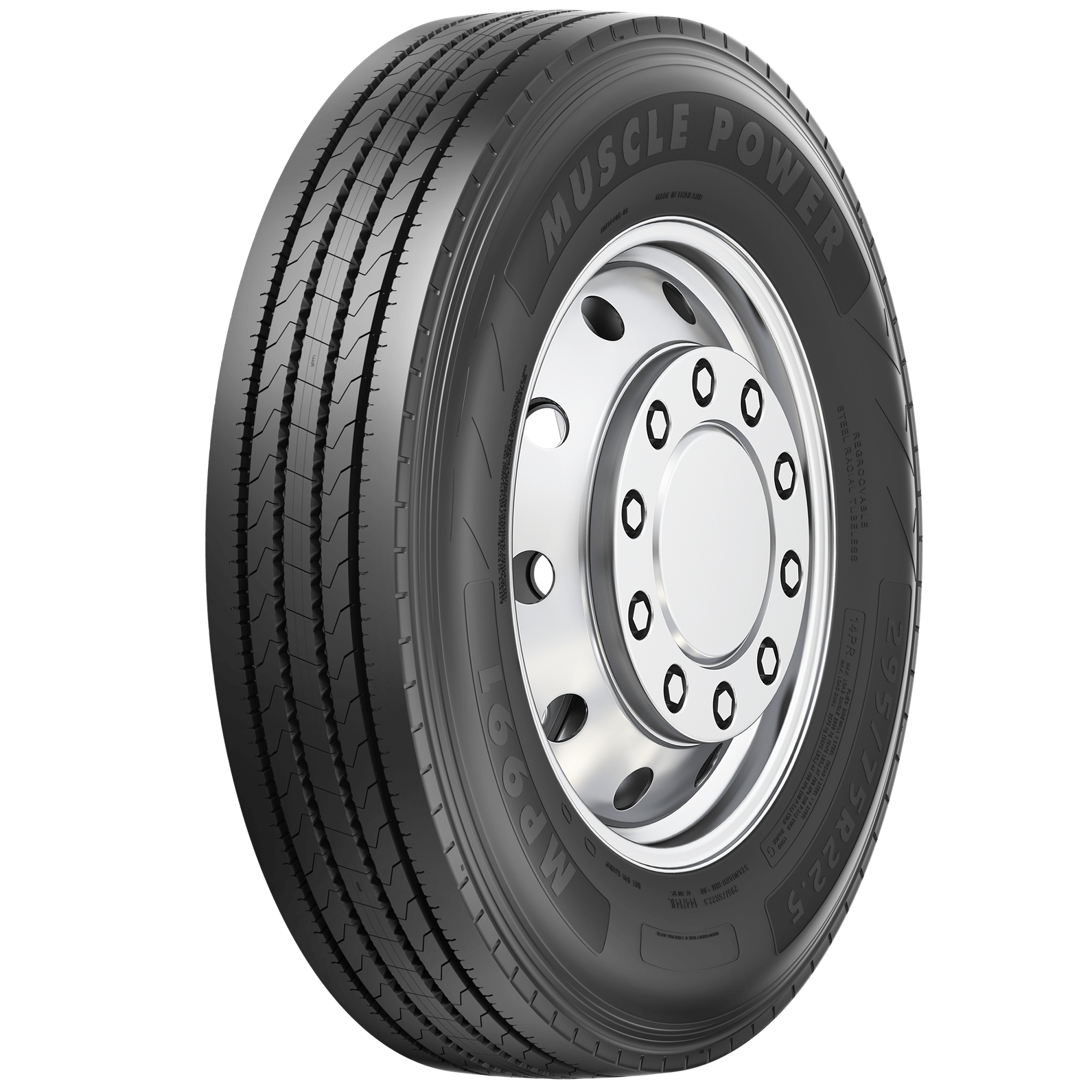
For MP991, the listed Load Range H sizes include 11R22.5 146/143L and 11R24.5 149/146L, while the Load Range G sizes include 295/75R22.5 144/141L and 285/75R24.5 144/141L. The right choice depends on the truck, axle load, wheel size, inflation pressure, and application requirements.
For front axle use, do not only ask "14-ply or 16-ply?" Ask: what is the load index, what is the actual front axle load, and what inflation pressure is required?