Stability for Chassis Service
Designed to support stable rolling performance under container chassis and short-haul trailer loads.

Commercial Truck Intermodal Tires
HS23 is designed for intermodal, container chassis, port, rail-yard, and drayage applications where stability, water evacuation, and uneven wear control matter.
Built for short-haul container movement, tight turns, wet yards, and demanding chassis service.
Container Chassis Commercial Truck Tire
The HS23 is a commercial truck intermodal tire designed for container chassis, drayage, port, rail-yard, and short-haul trailer service. Intermodal tires face different demands than clean highway trailer tires: frequent turns, stop-and-go movement, yard scrub, uneven pavement, container loads, wet surfaces, and repeated chassis use.
HS23 is built to support stability, water evacuation, low rolling resistance, and reduced uneven wear in demanding intermodal operations.
HS23 is a strong fit for container chassis fleets, port operators, drayage carriers, rail-yard service, and fleets moving containers between terminals, warehouses, ramps, and distribution points.
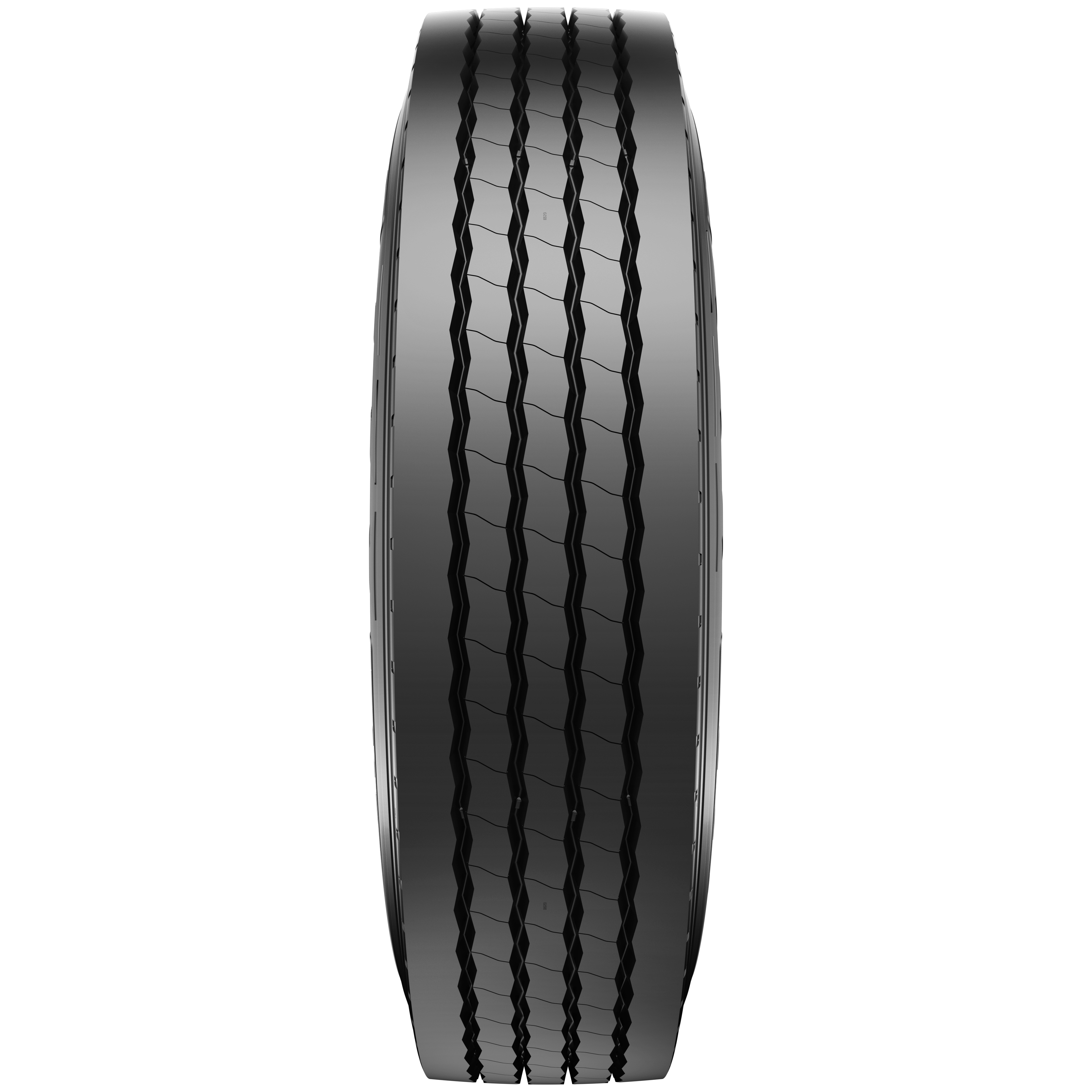 HS23 Front View
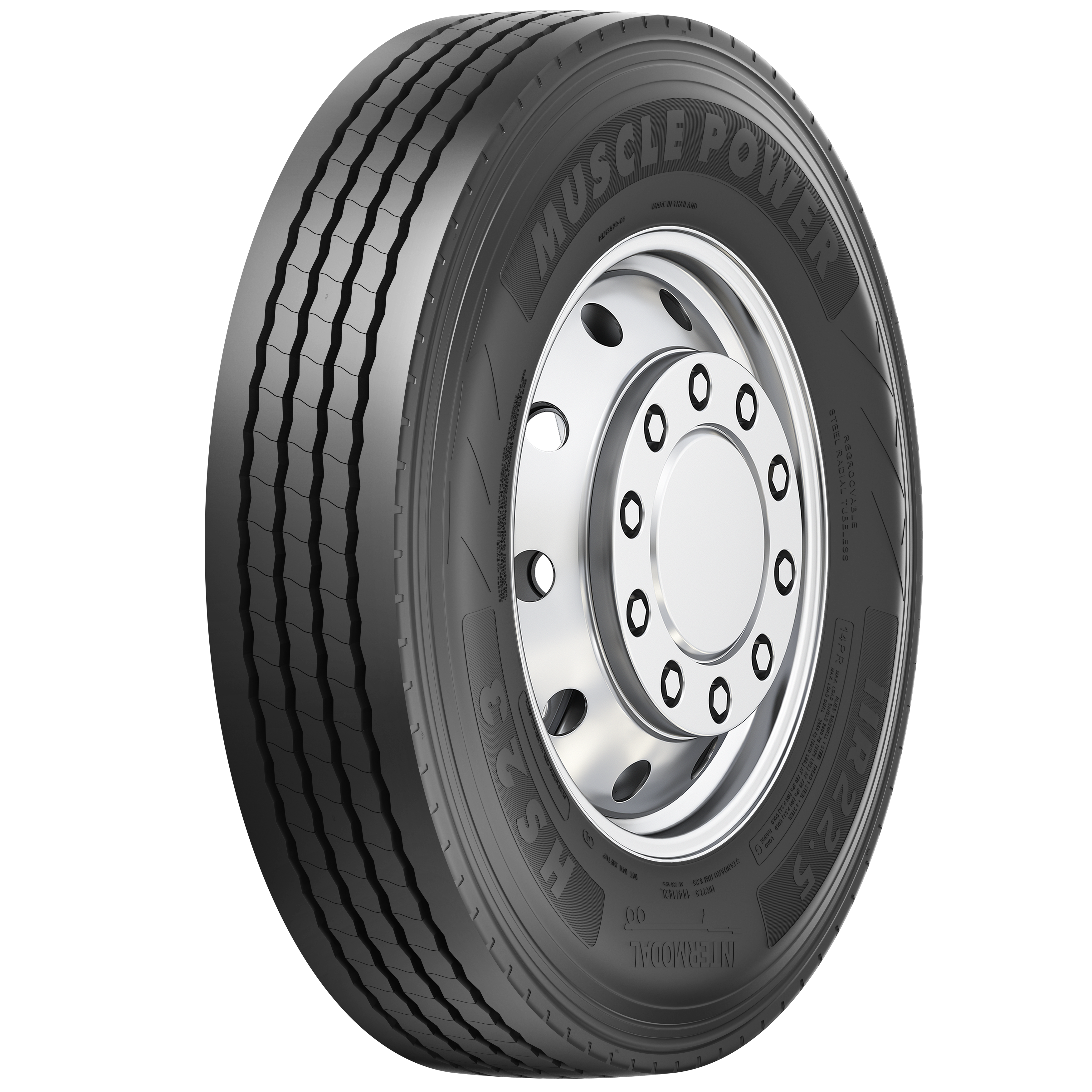 HS23 Angle View
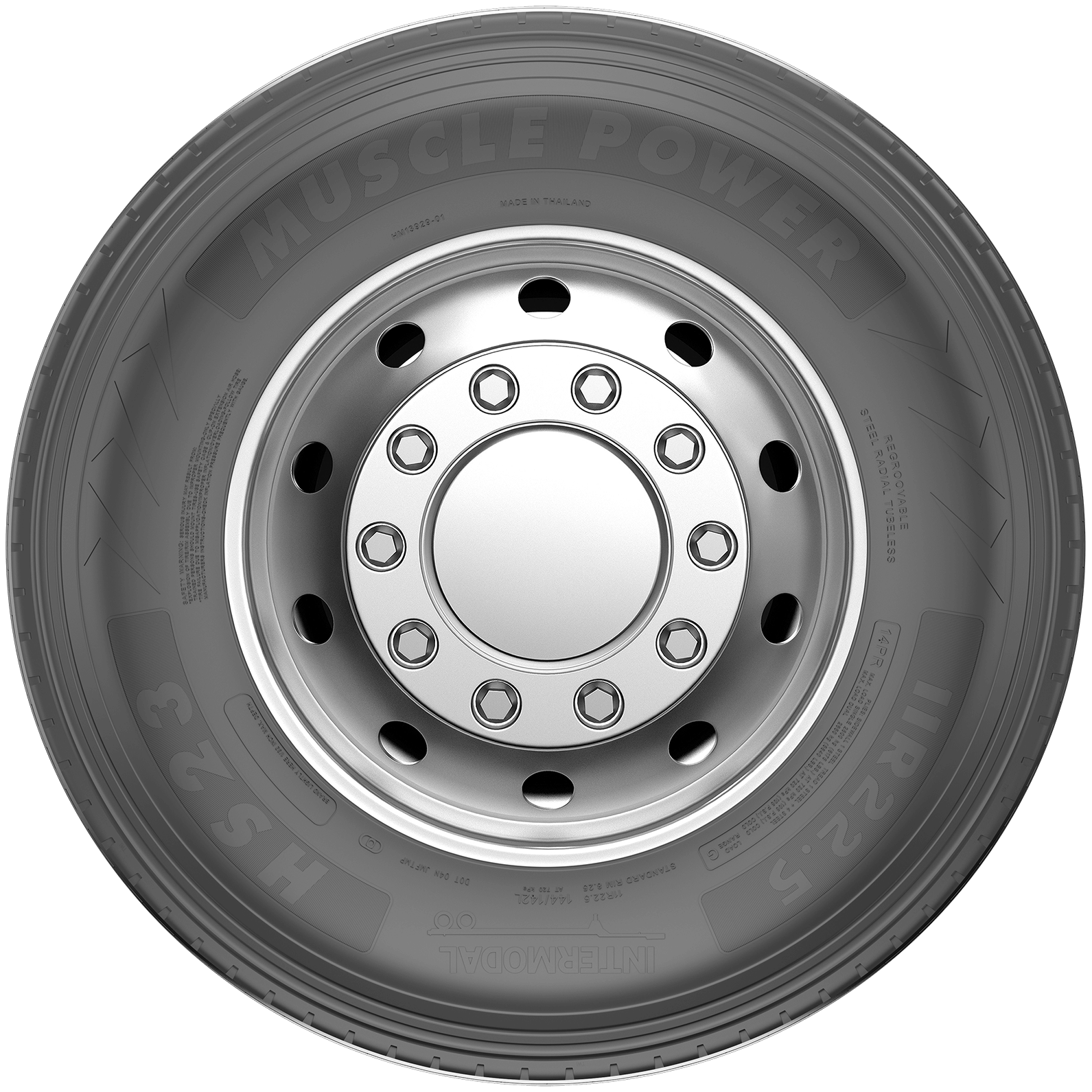 HS23 Side View
Designed to support stable rolling performance under container chassis and short-haul trailer loads.
Tread design helps move water away from the contact area for wet yards, ramps, and road surfaces.
Supports low rolling resistance and helps reduce uneven wear in repeated drayage and intermodal service.
Shoulder design helps promote even wear and longer mileage in chassis and container-hauling applications.
Use the HS23 specification table to match tire size, load range, service description, tread depth, pressure, revolutions per mile, and overall fit to the container chassis or intermodal application. Intermodal tires should be selected based on actual load, axle position, rim, inflation pressure, route, equipment condition, and service environment.
| Size | Ply Rating | Load Range | Load Index | Speed Symbol | Outside Diameter | Section Width | Tread Depth 32nds | Rim | Single Max Load/Pressure | Dual Max Load/Pressure | Static Load Radius | Revs Per Mile | Weight lbs | Tire Type |
|---|---|---|---|---|---|---|---|---|---|---|---|---|---|---|
| 11R22.5 | 14PR | G | 144/142L | L | 40.95 | 10.9 | 16 | 8.25 | 6175/105psi | 5840/105psi | 19.2 | 486 | 113.7 | TL |
Intermodal Tire Problem Solving
| Problem | Why It Happens | HS23 Focus |
|---|---|---|
| Chassis Scrub | Tight turns in ports, rail yards, docks, and distribution centers create lateral tire stress. | Stable footprint and shoulder design help support even wear. |
| Uneven Wear | Chassis alignment, load variation, yard movement, and repeated short hauls can create irregular wear. | Optimized footprint helps reduce uneven wear patterns. |
| Wet Yard Conditions | Ports, ramps, and yards often operate in rain, standing water, and slick pavement. | Tread design supports water evacuation and road contact. |
| Stop-and-Go Drayage | Drayage routes involve frequent braking, turns, loading, unloading, and short trips. | HS23 is positioned for demanding intermodal service cycles. |
| Cost Per Mile Pressure | Chassis fleets need tire value, durability, and predictable replacement planning. | Even wear and low rolling resistance support operating-cost control. |
Get manufacturer-direct access to Muscle Power commercial truck tire programs.
Buying for a single truck? Use Buy Online when available or contact a local Muscle Power dealer.
Intermodal Tire Education

Click image to enlarge
Built for yards, ramps, terminals, and rail ramp movement.
Designed around repeated chassis use and container loads.
Supports applications where lateral scrub is common.
Water evacuation matters in wet yards and road spray.
Short trips and repeated braking create different tire demands.
Optimized footprint and shoulder design help manage wear.
Intermodal service is not just regular trailer use. Container chassis and drayage equipment often operate in ports, rail yards, warehouses, ramps, terminals, and short-haul routes. Tires may face tight turns, stop-and-go movement, wet surfaces, uneven pavement, heavy container loads, and repeated chassis use.
This makes stability, water evacuation, shoulder wear control, and uneven wear resistance especially important. HS23 is designed for the realities of container chassis and drayage service, where tires need to perform under demanding, repetitive, short-haul conditions.

Click image to enlarge
Grooves help move water away from the tire contact area.
Ports and container yards often operate in wet conditions.
Short-haul routes can move quickly between yard and road surfaces.
Consistent road contact supports predictable chassis control.
Wet yard traction helps in tight ramps and terminals.
Ports, ramps, rail yards, and container yards can have wet pavement, standing water, road spray, and slick surfaces. A tire's tread design needs to help move water away from the contact area so the tire can maintain more consistent road contact.
HS23's tread design is positioned around better water evacuation and stability, making it a practical fit for fleets that operate in wet yards, ramps, terminals, and drayage routes where traction and control can change quickly.

Click image to enlarge
Yard maneuvering can drag chassis tires sideways.
Chassis alignment issues can accelerate irregular wear.
Wrong pressure increases heat and uneven contact.
Shared chassis may not receive consistent maintenance.
Helps manage contact pressure in repeated service.
Helps support even shoulder wear in chassis service.
Container chassis tires often suffer because the equipment is shared, used hard, and not always maintained like a dedicated highway trailer. Tight turns, poor alignment, worn suspension parts, underinflation, uneven loads, and yard maneuvering can create scrub and irregular wear.
Scrub wear raises cost because it shortens tire life, creates irregular shoulder wear, increases replacement frequency, and can make tire performance less predictable. In intermodal service, small maintenance problems can become expensive quickly because chassis equipment may move through ports, yards, terminals, and short-haul routes every day.
HS23's optimized footprint and unique shoulder design are built to help manage scrub, promote stable contact, and reduce irregular wear risk in demanding intermodal service.
Intermodal tire specifications help match the tire to the correct container chassis, wheel, load, pressure, route, and service environment. The HS23 spec table should be read as a fitment and application guide, not just a list of numbers.
HS23 is listed in 11R22.5, a common commercial truck tire size used in many chassis, trailer, and fleet applications. Tire size must match the wheel, equipment, axle position, and service requirements.
HS23 is listed as 14PR / Load Range G. Ply rating and load range describe the tire's load-carrying category. They do not replace the need to confirm load index, pressure, rim, axle, and application.
In 144/142L, 144 is the single-tire load index, 142 is the dual-tire load index, and L is the speed symbol. The first number applies when the tire is used by itself. The second number applies to each tire in a dual assembly.
HS23 is listed with 6175 lb single max load and 5840 lb dual max load at 105 psi. These ratings depend on proper inflation, correct rim fitment, and rated service conditions.
The L speed symbol commonly indicates up to 75 mph when the tire is properly inflated and operated within rated load and service conditions. Speed rating does not override load, heat, route, inflation, or maintenance requirements.
HS23 is listed with 16/32 tread depth. Tread depth should be matched to the application, route, wear expectations, and service environment.
Revolutions per mile and tire weight help fleets match tires properly, manage replacements, and understand fitment details. HS23 is listed with 486 revs per mile and 113.7 lb tire weight.
TL means tubeless, the standard configuration for modern commercial truck tire and wheel assemblies.
Application Reminder: The correct intermodal tire is not chosen by price or ply rating alone. It must match the container chassis, load, rim, inflation pressure, route, equipment condition, and service environment.
Tire Position Guide
Compare Muscle Power tire options by axle position: Steer Tires for front axle control and stability, Drive Tires for traction and torque, Trailer Tires for highway and regional free-rolling trailer service, and All Position Tires for flexible use across approved applications.
Intermodal Tire FAQ
An intermodal tire is a commercial truck tire used in container chassis, drayage, port, rail-yard, ramp, and short-haul container movement. These tires are often used in demanding environments with tight turns, wet pavement, yard scrub, uneven surfaces, stop-and-go service, and repeated chassis movement. The right intermodal tire should support stability, water evacuation, even wear, and predictable performance under container-hauling conditions.
A regular trailer tire is often optimized around highway or regional free-rolling trailer axle service. An intermodal tire is focused more on container chassis and drayage conditions, where tires face tight yard turns, loading and unloading cycles, chassis scrub, wet terminals, ramps, rail yards, and frequent short-haul movement. Intermodal tires must handle a harsher mix of yard movement, shared chassis equipment, wet pavement, and uneven wear risk.
The HS23 is the Muscle Power intermodal tire. It is designed for container chassis, port, rail-yard, drayage, and intermodal service where stability, water evacuation, low rolling resistance, and reduced uneven wear are important. HS23 is the tire to feature when the application is container movement, chassis service, ramps, yards, terminals, and short-haul drayage.
The HS23 is listed in 11R22.5 on the Muscle Power Intermodal Tires specification table. The live specification row lists 14PR, Load Range G, 144/142L service description, 16/32 tread depth, and TL tubeless construction. Final fitment should always be matched to the chassis, wheel, axle load, pressure, and service environment.
Water evacuation matters because ports, ramps, rail yards, and container yards often operate in wet conditions, road spray, standing water, and slick pavement. A tread design that helps move water away from the contact area can support more stable road contact and better control in wet intermodal service. For drayage carriers, wet-yard performance can matter just as much as highway performance.
Uneven wear on container chassis tires can come from tight turns, yard scrub, underinflation, alignment issues, worn suspension parts, uneven container loads, shared chassis use, and repeated stop-and-go service. Because intermodal chassis are often used hard and shared across operations, tire maintenance can be inconsistent. HS23 is designed with an optimized footprint and shoulder design to help support even wear in this kind of service.
HS23 is a strong fit for drayage carriers moving containers between ports, rail ramps, warehouses, distribution centers, and yards. Its tread design focuses on stability, water evacuation, low rolling resistance, and reduced uneven wear in intermodal and container chassis service. It is especially relevant for fleets dealing with wet yards, tight turns, short hauls, and repeated chassis movement.
In 144/142L, 144 is the single-tire load index, 142 is the dual-tire load index, and L is the speed symbol. The first number applies when the tire is used by itself. The second number applies to each tire when used in a dual assembly. The rating must be matched to the wheel, axle, inflation pressure, load, route, and application.
TL means tubeless. Tubeless construction is the standard configuration for modern commercial truck tire and wheel assemblies. The tire still needs to be mounted on the correct rim and inflated according to the rated load and application.
HS23 should be considered when the trailer or chassis application involves intermodal service, container chassis work, ports, rail yards, ramps, terminals, and short-haul drayage. For clean highway trailer service, a dedicated trailer tire may be the better fit. The best choice depends on axle position, load, rim, inflation pressure, route, equipment condition, and operating environment.
Muscle Power Tires is a manufacturer-direct commercial truck tire brand. We work primarily with wholesale distributors, tire dealers, and large truck fleets. For single-truck or small retail purchases, please buy online when available or contact a local dealer/distributor carrying Muscle Power products.